Welcome to Telara. I play Mage and I write from experience: this calling uses a charge-style resource in many souls and rewards timing, pet management, and quick decision-making. If you want practical steps from level 1 toward endgame, read on—I’ll tell you what worked for me and what didn’t.
Short version: pick a soul that matches how you like to play, learn its charge mechanics, and gear for Intelligence first. Yes, it’s that direct.
How the Mage Feels (core mechanics) 🔮
The Mage uses a soul system where some spells build charges and other spells spend them. Why that matters: charges change your rotation and force you to decide when to finish. In my experience, new players ignore charge timing and waste huge DPS windows.
Surprisingly, many souls share similar charge caps (usually up to five charges). Watch your counts; that’s basic resource math. This doesn’t always work the same across every soul (depends on your niche and the soul design), so test it.
| Attribute | Effect |
|---|---|
| Intelligence | Increases spell power and scales many finishers |
| Wisdom | Improves mana regen and supports sustained casting |
| Spell Power | Direct increases to damage/healing; multiplies with Intelligence |
Starter Souls I Recommend ⚡
Which soul should you pick? It depends on playstyle. I found Elementalist easy for solo content because its pet keeps you alive. Pyromancer offers straightforward burst; Chloromancer heals by dealing damage and feels satisfying in groups.
- Elementalist — pet control, steady DPS, great early soloing.
- Pyromancer — high burst, simpler priority system (good for dungeons).
- Chloromancer — hybrid healer-damage role, useful in groups.
Here’s a blunt, possibly controversial opinion: Elementalist gets overrated in theorycrafting circles. In practice, its pet management creates more micro than some players enjoy. To be fair, others love that micro—so there are exceptions.
Starter Build I Used (practical)
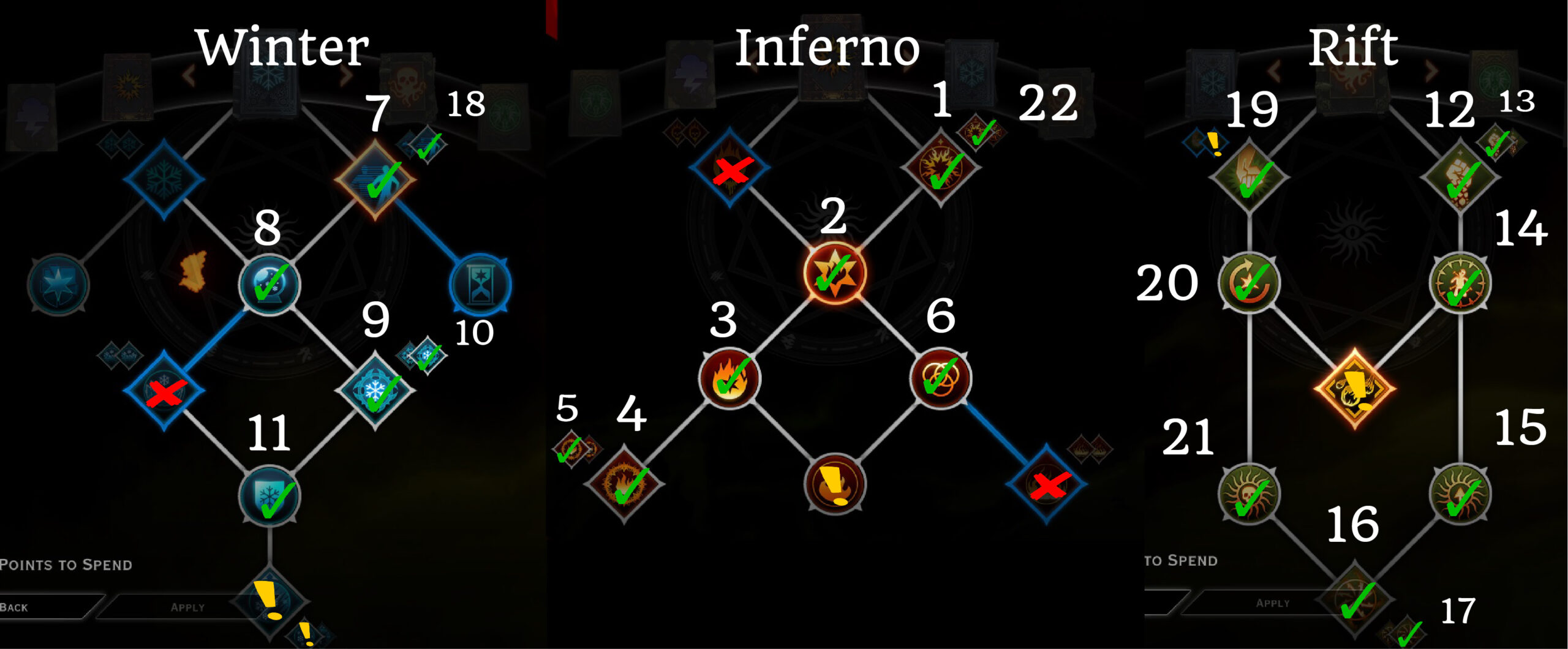
My go-to early build was Elementalist primary with Pyromancer as support. I put most points in Elementalist for the pet and reliable nukes. Why? Because the pet reduces downtime, which means faster clears and fewer consumables spent.
Distribution example (simple): 61/10/5 — Elementalist/Pyromancer/Archon. That spread gave me strong solo damage and some defensive options. It won’t be perfect for hardcore raiding, but it carried me through low- and mid-level dungeons.
- Summon pet before pulling.
- Keep a buff (Pillaging Stone or similar) active.
- Apply DoTs, then use charge builders, then finish at five charges.
// rotation pseudocode (example)
if (!pet.up) summon_pet();
apply_dot();
while(charges < 5) use_charge_builder();
use_finisher();
Gear Basics and Stats
Intelligence first. That’s not negotiable for most Mage builds because it boosts spell power directly. After that, choose between Spell Power, Crit, or Wisdom based on whether you’re burst-focused, sustained, or healing.
| Role | Primary Stat | Next Stats |
|---|---|---|
| DPS | Intelligence | Spell Power → Crit |
| Healer | Intelligence | Wisdom → Spell Power |
| PvP | Intelligence | Endurance → Spell Power |
Where to get gear early: quest rewards that grant Intelligence cloth, normal dungeon blues, crafted pieces if you have the Outfitter profession, and occasionally PvP vendors—some items are worthwhile for PvE too. This is practical advice as of March 12, 2025.
Leveling Tips (short and useful)
Do all quests in a hub before moving. Use your pet. Join events when they spawn. Those three things alone cut your playtime and raise your XP per hour.
Longer tip: mix dungeons between zone quests from levels 20–35 for better gear and XP variety; from roughly 35–50 focus on zone events and planar rewards; after that, shift to higher-level content that matches your gear (and if you want specifics for your server, ask your guild—servers differ). There are exceptions if you like exploring or doing roleplay; this path is efficiency-focused.
PvE vs PvP: Adjustments
For PvE, aim for sustained damage and resource efficiency. For PvP, swap in burst and control—crowd control and mobility matter more than raw Spell Power. Why? Because players can interrupt and reposition you, so survivability counts as much as damage.
Example PvE priority: Harbinger or Pyromancer combos work well for consistent dungeon output. Example PvP priority: Pyromancer plus Dominator for instant burst and control.
Tip: if you’re struggling in battlegrounds, stop chasing kills and focus on control windows. Healing targets and peel will win fights more often than raw DPS!
Final Practical Notes (short)
Test builds in low-risk content. Join a mage guild if you want quicker feedback. I’ve noticed fast improvement when I asked for critique rather than staying solo. Between us, gear alone won’t make you a good mage; practice will.
Oddly enough, one counterintuitive trick: sometimes a lower-intelligence piece with better cooldown reduction helps more than a higher-damage item because it smooths your rotation. Try it—don’t assume higher numbers always mean better play.
Want one more controversial line? PvP players who stack Crit early are often making a mistake—endurance and control resistances matter more than flashy crits (there, I said it!).
May your spells land, and your pet not eat aggro at the worst moment. If you want a custom build for your level and playstyle, tell me your level and preferred soul and I’ll sketch one (quickly!). 😊