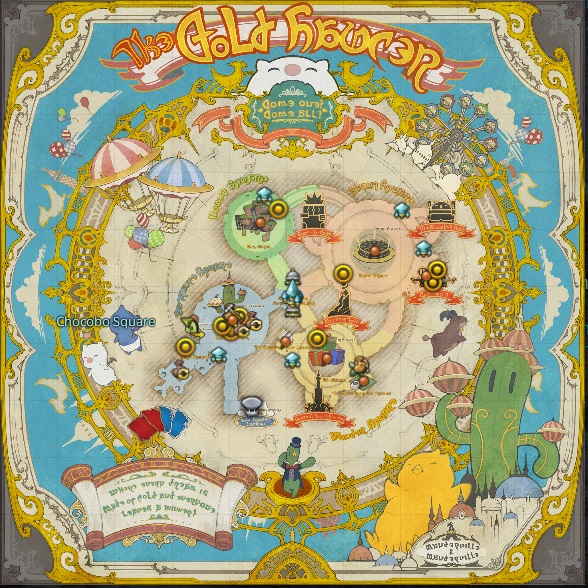
Triple Triad at the Gold Saucer is still one of my favorite side activities in Final Fantasy XIV, and I’ll tell you plainly how to get good at it. I’ve played it since the Gold Saucer reopened for cross-world play, and I’ve noticed a few hard truths: rarity doesn’t equal win, tournaments favor preparation, and some meta choices are just plain overrated.
Getting started — quick and direct
Unlock the Gold Saucer by doing the level 15 quest “It Could Happen to You” in Ul’dah. Then find the Triple Triad tables scattered through the facility. The board is a 3×3 grid; you place cards one at a time. Win by controlling more cards when the board fills.
New players start with simple 1-star cards. Each card shows four numbers: top, right, bottom, left. Place a card next to an opponent’s and compare the touching numbers. Higher wins and flips the opponent’s card.
Pro tip: Practice against NPCs first. The Tutorial attendant gives free starter packs and you won’t lose much if you mess up (we’ve all been there).
Rules and the why behind them
Cards run from 1-star to 5-star. Higher star usually means higher numbers, but why that matters depends on the rule set. For example, Plus and Same change everything because they let you flip multiple cards at once — that’s why I prefer cards with repeated values when I expect those rules. It’s not enough to have big numbers; you need numbers that interact with the rule.
| Rarity | Stars | Typical Numbers |
|---|---|---|
| Common | 1★ | 1–4 |
| Uncommon | 2★ | 2–6 |
| Rare | 3★ | 4–8 |
| Epic | 4★ | 6–9 |
| Legendary | 5★ | 7–A (A=10) |
Example (simple): Your card [5][3][2][4] vs Opponent [2][6][3][1]. Place so your 3 touches their 1 → 3 > 1, you flip it. Why that’s important: small advantages snowball, especially with Plus/Same.
Building your first competitive deck
Your deck is five cards. Balance matters more than a flashy legendary. I usually build with two corner-focused cards, two edges, and one center that’s solid all around (this depends on your collection). There are exceptions, of course.
- Corner: high on two adjacent sides (7+)
- Edge: good on three sides, one weak
- Center: at least 4 on every side
- Combo: works with Plus/Same
Why these roles? Corners affect two lines; edges defend long runs; center anchors control. If you blindly pick five 5★ cards you’ll find holes quickly — trust me, I learned that the hard way.
Counterintuitive insight: a mid-tier 3★ with balanced numbers often beats a 5★ that’s lopsided. Controversial? Maybe, but tournament results back it up.
Tournaments and rewards (as of 2025)
Tournaments run periodically and give big MGP if you place high. Typical top rewards can be around 50,000 MGP plus exclusive cards; lower brackets get smaller payouts. These events favor players who bring multiple decks and read openings well. Want to get far? Adapt mid-match and save a trick card for when it actually matters.
Advice: don’t auto-entry because you feel like showing off; plan which rulesets you’ll face and bring two or three specialized decks.
Opening psychology matters — the first card tells a lot about someone’s plan. Curious? Watch their second move before committing to risky plays.
How to get cards (realistic expectations)
Cards come from several places: Gold Saucer NPCs, overworld NPCs, dungeons/trials, tournaments, and card packs bought with MGP. Drop rates vary; commons are frequent, legendaries are rare. You must win matches to earn drops — that’s the Rule of Nine (you have to win to get a chance at the opponent’s card).
| Method | Typical Quality | Time |
|---|---|---|
| Gold Saucer NPCs | 1–3★ | Low |
| Overworld NPCs | 2–4★ | Medium |
| Dungeon/Trial | 3–5★ | High |
| Tournaments | 4–5★ | Very High |
| Card Packs (MGP) | Random | Low |
Farming tip: try off-peak hours for rare NPCs (less competition). Also, mid-tier NPCs often give better time-to-reward than grinding a single legendary boss all day (this depends on your niche and patience).
Advanced rules that change everything
Beyond basic capture, several rule combos alter strategy drastically. Order forces you to play cards in a set sequence — build decks that can survive forced play. Random removes deck planning and rewards adaptability. Chaos scrambles values (watch this: it can ruin a carefully planned Plus). Sudden Death removes draws and extends matches until there’s a clear winner.
- Chaos + Same + Plus — massive swings; practice before trying
- Reverse + Order — weird, but doable if you plan
- Draft + Sudden Death — endurance and on-the-fly choices
Rule priority matters during mixed-rule events. Learn the hierarchy so you know which interactions will fire first (this helps avoid painful surprises).
Practical examples and a tiny cheat-sheet
Card format:
[Top, Right, Bottom, Left]
Example: [6,6,2,6]  // great for Same/Plus
- Play corners early if you expect Plus — they’re the engine.
- Save a versatile card for the last two plays.
- Don’t waste MGP on packs if you only want one specific legendary (it’s gambling).
Honestly, the Gold Saucer economy feels off sometimes — I think paying MGP for random packs is often a poor value compared with targeted farming. That’s controversial, sure, but between us: grind smart, not hard.
Final notes — short and frank
Triple Triad rewards practice, reading opponents, and deck synergy more than raw rarity. I’ve seen beginners beat veterans by forcing rule interactions they hadn’t planned for. There are exceptions, and this won’t always work, but if you focus on combos and position rather than purely chasing 5★ cards you’ll improve fast.
Want a last quick tip? Study two archetypes deeply rather than ten superficially. You’ll win more matches, and you’ll enjoy the game. Go play — and hey, bring a deck that surprises people once in a while!
— written from experience, not a script (I’m a long-time player and yes, I still flip cards like it’s 2009).