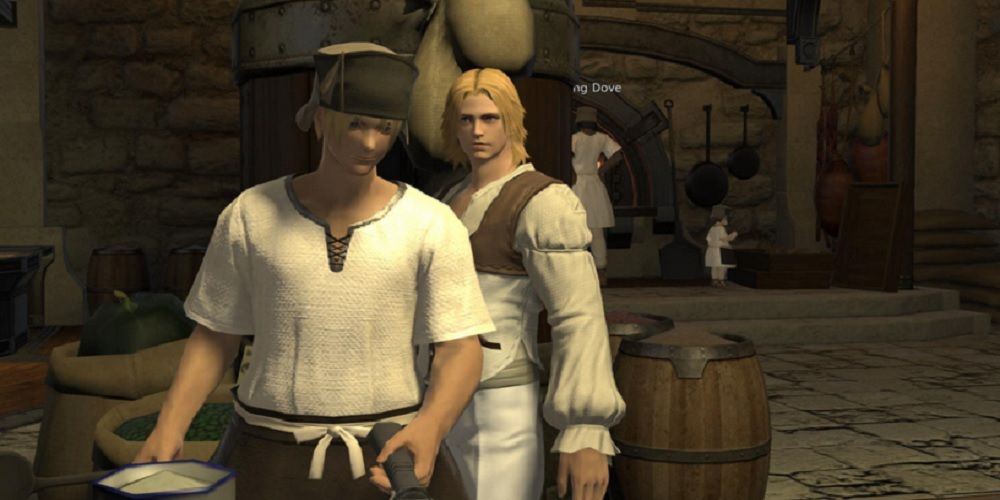
I’ve played Culinarian in Final Fantasy XIV for years, and I’ll tell you plainly: cooking is one of the easiest crafting jobs to pick up and one of the most profitable when you know what to watch. I’m writing from experience, and I’ve noticed small decisions (gear, which recipes to push, when to sell) make the biggest difference. This guide explains what to do, why it works, and where people trip up—briefly and without fluff.
🍳 Starting with Culinarian
Go to the Culinarian’s Guild in Limsa Lominsa and speak with the receptionist to unlock the class. You’ll start with simple tools and recipes you can buy ingredients for—no huge gathering grind required. Upgrade your main skillet every few levels. Why? Better tools raise success and quality rates, which saves ingredients and time.
Short tip: always have food active while crafting. Even a basic boiled egg gives CP that makes many crafts easier (we found this mistake constantly among new cooks).
Crafting relies on three stats: Craftsmanship, Control, and CP. Craftsmanship moves progress, Control increases quality, CP limits actions. Balance them by gear and food so you won’t waste rotation opportunities.
📊 Key Recipes by Level
| Level | Representative Recipes | Main Ingredients |
|---|---|---|
| 1–15 | Boiled Egg, Grilled Trout, Orange Juice | Egg, Trout, Orange |
| 16–30 | Walnut Bread, Meat Skewer | Walnuts, Meat |
| 31–50 | Knight’s Bread, Beef Stew | Rye Flour, Beef |
| 51–70 | Expansion-themed dishes | Expansion ingredients |
| 71–90 | High-end biscuits, smoked poultry | Specialty beans, chicken cuts |
Early levels teach fundamentals; mid levels force multi-step recipes and teach economy of subcomponents. High-level food (70+) usually needs rare ingredients and precise rotations but sells best during raid windows (watch Tuesdays!). This doesn’t always work the same on every server—depends on your niche.
⚡ Leveling Fast (what I do)
Leves give the best XP per effort. Do triple turn-ins when possible and aim to hand in High Quality items for the XP multiplier (200%). Grand Company turn-ins are also huge—starred items or HQ turn-ins push you along fast. Custom Deliveries after level 60 are nice weekly bursts of XP.
Daily routine I use:
1. Check GC turn-ins (starred)
2. Triple-turn in highest-level leves
3. Craft for Custom Deliveries (weekly)
4. Use leftover time for Firmament work
I recommend Ishgardian Restoration (Firmament) for levels 20–80 if you want steady XP and materials. It’s social and less grindy. Keep multiple crafters near the same level; shared components save time and market trips.
🛠️ Rotations and Macros
Understanding rotations is about stacking Inner Quiet, using Great Strides, then Byregot’s Blessing. That’s the core. But here’s the funny part: strict macros will often fail on high-difficulty crafts. Manual, condition-aware play outperforms macros for tricky recipes. Macros are fine for simple, repeatable items, though (to be fair, they save time).
Example basic rotation (works around ~400 CP):
/ac "Reflect"
/ac "Manipulation"
/ac "Waste Not II"
/ac "Groundwork"
/ac "Groundwork"
/ac "Preparatory Touch"
/ac "Preparatory Touch"
/ac "Preparatory Touch"
/ac "Great Strides"
/ac "Byregot's Blessing"
/ac "Careful Synthesis"
Condition-based crafting matters: use Precise Touch on Good/Excellent conditions. Specialist skills (if you pick Culinarian as a specialist) add tools like Reflect and Specialty: Reinforce; they matter for top-end crafts but cost scrips and planning.
💰 What Sells (and why)
Raid food is the big earner right after a new tier drops—demand spikes because raiders want edge stats. Tuesday resets (weekly raid fresh starts) raise demand; patch release days create early-window opportunities. But here’s a controversial take: sometimes the raid-food bubble is overhyped. Not every “named” food keeps value past the first three weeks. You’ll need to time supply to capture peak prices or else sit on stock that drops.
| Category | Profit | Investment |
|---|---|---|
| Current Raid Food | Very high (short term) | Medium |
| Leveling Food (20–79) | Moderate | Low |
| Crafting/Gathering Food | Steady | Medium |
| Intermediate Ingredients | Often surprisingly good | Low–Medium |
Here’s a counterintuitive insight: intermediate components (doughs, broths) sometimes net more than finished meals because many crafters skip making subcomponents. I’ve sold pre-made broths for a nice margin on servers with lazy crafters. Oddly enough, effort distribution beats flashy end products at times.
Market research is simple: watch Market Board history (use tools like Universalis) and calculate ingredient costs before listing. If your ingredient spend equals sale price, don’t do it—sounds obvious, but people ignore it all the time.
Advice, Caveats, and a Little Opinion
Personally, I think someone who treats Culinarian like a second income stream and does a few hours a week will beat the person who tries to dominate market hours 24/7. There are exceptions, of course—if you have unlimited playtime, go hard. Between us: focus on stable items first, then speculate during patch weeks.
“Focus on tools and stock timing. Good gear saves materials; good timing saves gil.”
Two debatable points: 1) macros are often overused and stunt skill growth, and 2) specializing as Culinarian isn’t always necessary to make gil—many players profit without specialist skills. You’ll decide which side you’re on.
One quick metaphor: crafting is like tuning a piano—small adjustments change the whole sound. Make incremental gear and rotation improvements; you’ll notice compounding returns.
Last practical list (short):
- Upgrade your skillet every 5–10 levels.
- Keep food buffs on when crafting.
- Use leve and GC turn-ins for XP.
- Watch Tuesdays and patch days for market moves.
Surprisingly, you don’t need perfect gear to make decent gil—consistency and market sense matter more than you’d expect. This doesn’t always work for every server or player, but it’s a reliable starting point. Want specifics for your server? Ask me and I’ll look at pricing patterns (I’ll check current listings as of 2025-11-26).
Enjoy the cooking. I’ll admit I stumble over details now and then, but that’s how I learned. Keep experimenting, keep your ear on the market, and don’t be afraid to sell intermediate components when demand shows up. The kitchen in Eorzea has room for everyone—if you play it smart, you’ll be fine!