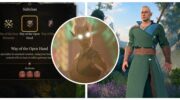
The mind flayer tadpole in your head is more than a plot device in Baldur’s Gate 3 — it’s a playable mechanic that gives psychic abilities. I’ve played dozens of runs and I’ll tell you plainly: these powers change how fights and conversations play out. You can treat them like tools, or like a slow, creeping identity shift. Which do you want?
- 🧠 What illithid powers are, simply
- 🔓 How to get your first powers
- 📜 A compact list of starter powers
- Tier structure
- ⚡ Combining powers with classes — why it matters
- 🎮 Step-by-step: practical access
- ⚠️ Narrative consequences — specifics and caveats
- 💡 Pro tips — and why they work
- Surprising insight
- Quick reference — short checklist
🧠 What illithid powers are, simply
Illithid powers are psychic abilities unlocked from a tadpole implanted during the opening. They let you do things like talk telepathically, mess with enemy minds, or deal psychic damage. They don’t use spell slots, so any character can access them once the skill tree appears in your character screen (usually after the first long rest following the nautiloid crash).
In my experience, those powers are a risk-and-reward bundle: they help in combat and social checks, but they affect story arcs and companion relations (some approve, some don’t). Honestly, the mechanical benefit is real; the moral cost depends on your choices and who you care about.
🔓 How to get your first powers
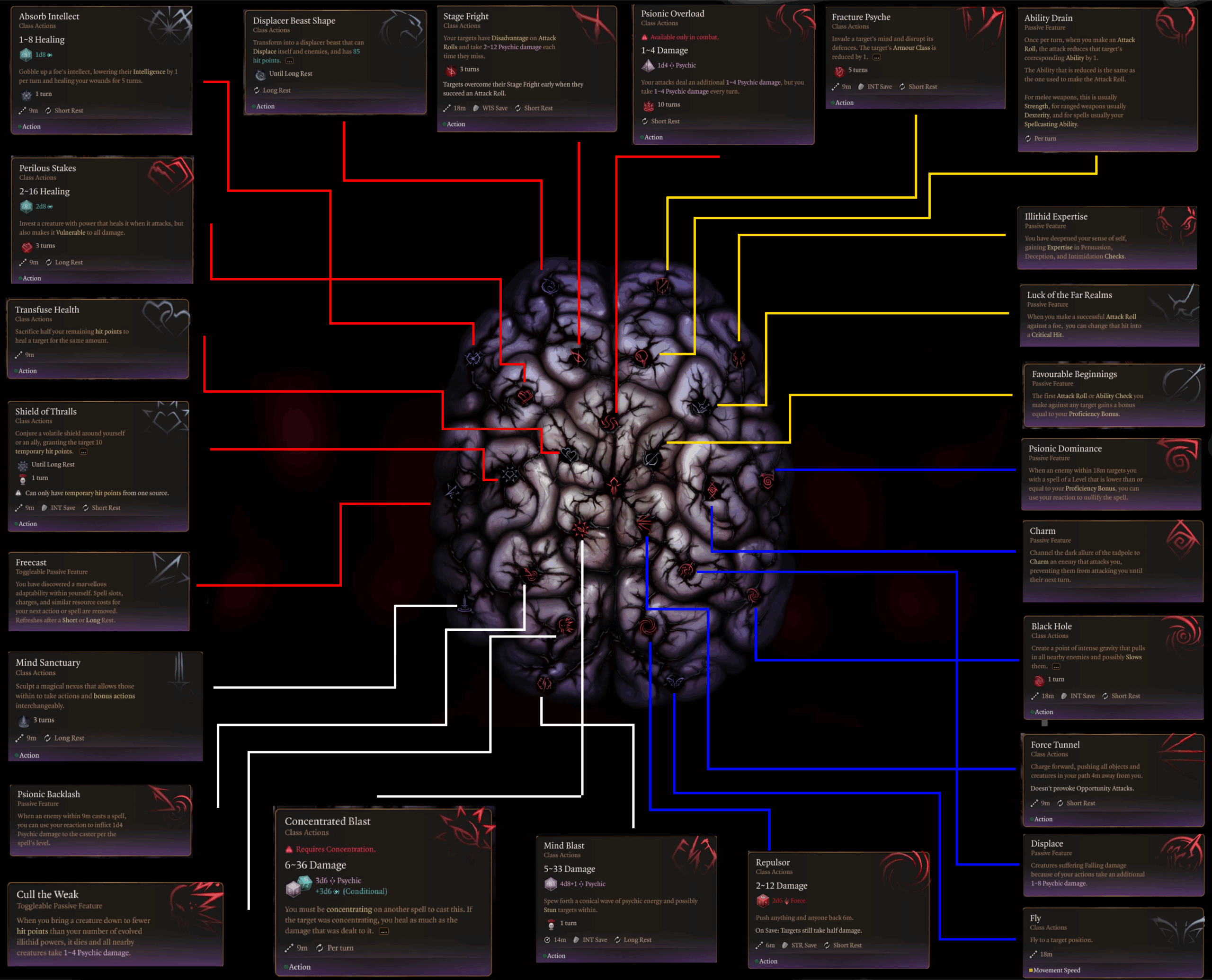
Early in Act 1 you unlock the illithid interface. Open your character sheet and click the brain icon to see the tree. Your first point is free. I’ve noticed most players pick either dialogue utility or a basic combat node first — both are valid.
Quick, practical tip: you can store extra tadpoles in your inventory and use them later. Save them for the character you play most (this doesn’t always work if you plan to swap roles).
📜 A compact list of starter powers
Here’s a short, verified table of common early options (names and effects used in-game):
| Power | Effect |
|---|---|
| Favorable Beginnings | Advantage on a first attack or check |
| Concentrated Blast | Direct psychic damage ray |
| Transfuse Health | Sacrifice own HP to heal an ally |
Tier structure
There are multiple tiers: early nodes you get quickly, middle nodes that require investment, and late nodes that need special tadpoles found in later acts. To be specific: the outer, most powerful nodes usually require consuming an Act 2 or Act 3 tadpole.
⚡ Combining powers with classes — why it matters
Why pick certain powers for a class? Because they fix weaknesses or amplify strengths. For example, pairing a rogue’s sneak attack with Favorable Beginnings gives more reliable crits. Wizards gain extra offensive options without burning spell slots (which matters on long adventuring days). I’ll be blunt: some pairings feel overpowered, and yes, some players call that “unbalanced” — that’s debatable.
To be fair, here’s a short list of sensible pairings:
- Fighter/Barbarian: mobility + openers (hit hard fast)
- Wizard/Sorcerer: extra damage without slots
- Rogue/Ranger: control + guaranteed crits
🎮 Step-by-step: practical access
- Collect mind flayer specimens (dropped by True Souls, found in containers, or as quest rewards).
- Open the brain icon in your character sheet (PC:
Bopens menus by default). - Spend points in the tree; branch left for utility, right for offense, or mix.
- Later in Act 3 you can consume special astral-touched tadpoles to unlock outer nodes.
Watch this: drag abilities to your hotbar. If you don’t, you’ll forget them in the heat of combat — trust me, I’ve done it.
⚠️ Narrative consequences — specifics and caveats
Using powers causes visual changes (veiny eyes, new dialogue lines) and affects companions. For example, Astarion might applaud certain choices while Lae’zel gets openly hostile; that’s anchored in their written reactions as of the game’s full release on August 3, 2023. There are exceptions: some dialogue branches remain available even if you embrace the tadpole, so don’t assume a single choice locks everything forever.
Here’s the big caveat: consuming an Astral-Touched tadpole in Act 3 unlocks the strongest abilities but shifts story options and some endings. This doesn’t always block every romance or path, but it changes relationships and certain finale scenes.
💡 Pro tips — and why they work
“Save tadpoles for the character you play most — they can’t be respecced.”
Why? Because once assigned, those powers are permanent and define long-term synergy. I recommend waiting on nonessential nodes until you find better specimens in Acts 2 and 3. This timing matters because later tadpoles open outer-ring powers that early points won’t reach.
Hidden interactions exist. For example, Favorable Beginnings interacts with sneak attacks; Shield of Thralls triggers on charm effects; Luck-like effects can be combined with smites for devastating hits. Try combinations — experiment and record what works. We found some odd synergies by accident (and yes, it felt like cheating).
Surprising insight
Counterintuitively, delaying some illithid unlocks can improve roleplay outcomes even while making combat harder early. You sacrifice power now for better story options later. Oddly enough, that trade-off can be more fun.
Quick reference — short checklist
- Store extra tadpoles.
- Use the brain icon to open the tree.
- Assign to hotbar.
- Expect companion reactions; save often.
Want one controversial take? I think embracing the tadpole often gives more interesting play than refusing it — some will disagree fiercely. Between us, if you’re chasing mechanical power, it usually pays off; if you’re chasing a ‘pure’ moral route, resist. Depends on your niche and what you value in a run.
Here’s a tiny code snippet to remind you of a hotkey:
Press B → Character Menu → Brain iconTwo final metaphors: the tadpole is like a second brain grafted into your decisions, and using its powers is like adding fuel to a slow-burning engine — it speeds things up, but the temperature rises. Surprisingly, the game still lets you steer the vehicle.
If you want, I can show exact tadpole locations and a sample build next (I’ve mapped a few runs). Want that?