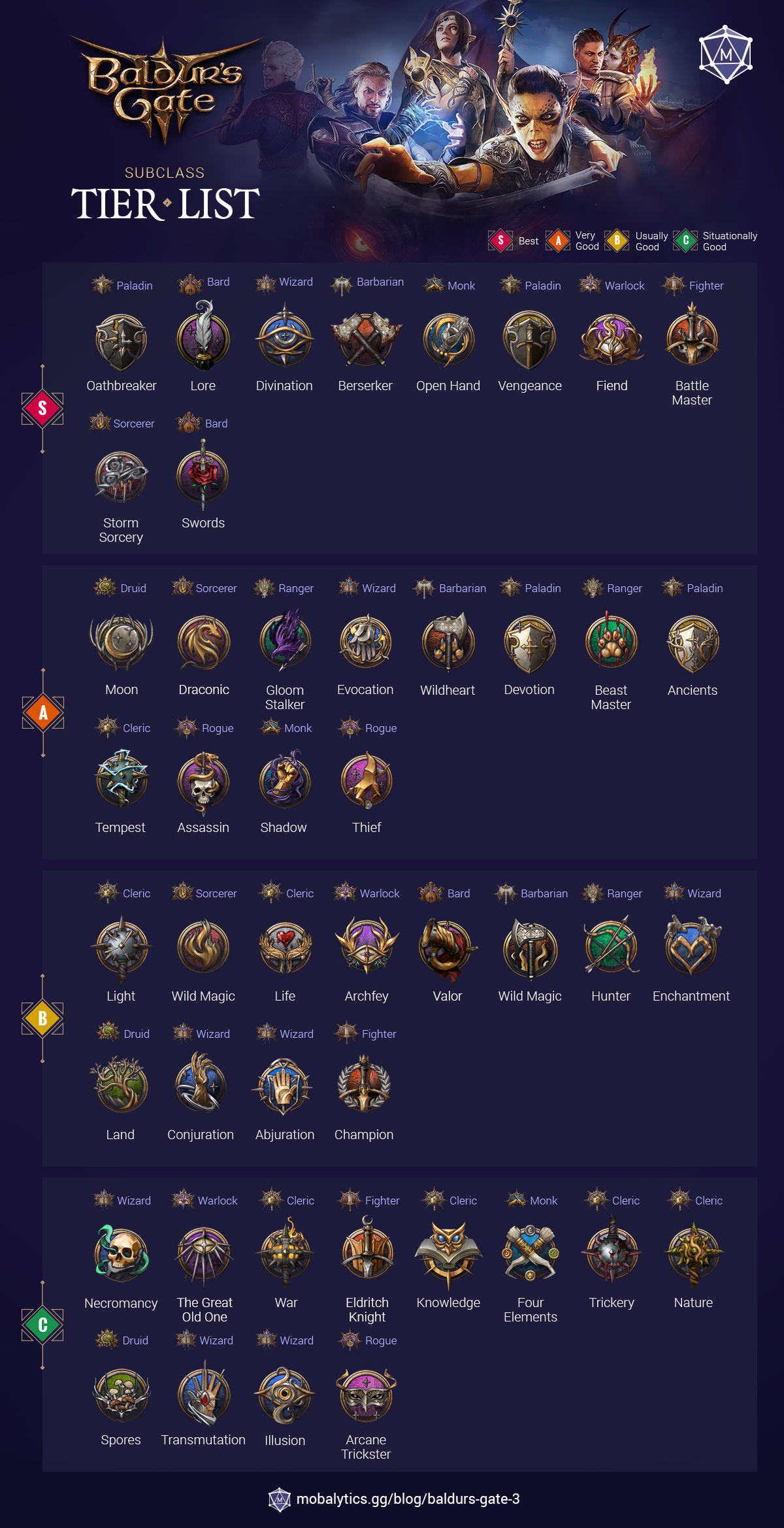
Choosing a Sorcerer subclass in Baldur’s Gate 3 changes how you play. I’m a long-time player (I started in 2020) and I’ve seen builds that steamroll Act 3 and others that fall apart fast. Below I’ll tell you what each subclass does, why it matters, and how I actually use them — honestly, some choices surprise people.
Wild Magic Sorcerer: chaos that can bite or bless 🎲
Wild Magic makes spells unpredictable. You get Wild Magic Surge and Tides of Chaos at level 1, Bend Luck at 6, and Controlled Chaos at 14. That’s the backbone. The surge table in BG3 can summon a hostile Mephit, give you temporary hit points, or cast Fireball centered on you. Yes, really.
Why pick it? Because it’s fun and sometimes wildly powerful. Why avoid it? Because one bad surge can wipe a party in Act 3 (and that matters on 21 April 2025, when many players hit the hardest content). This doesn’t always work for every group — it depends on your tolerance for risk and whether your teammates will carry you when a surge goes sideways.
I’ve noticed that Tides of Chaos is the leverage: use it when a check matters, but expect a surge after. (Save-scumming helps if you’re obsessive.)
“If you like gambling with your spells and can adapt on the fly, Wild Magic rewards creativity.” — my practical note
Draconic Bloodline: steady, elemental, reliable 🐉
Draconic gives Draconic Resilience (13 + Dex AC) and Elemental Affinity at level 6. Pick a dragon ancestry and you get a matching damage type and resistance. Specifics:
| Ancestry (example) | Damage | Resistance |
|---|---|---|
| Red / Gold | Fire | Fire |
| Blue / Bronze | Lightning | Lightning |
| White / Silver | Cold | Cold |
| Black / Copper | Acid | Acid |
| Green | Poison | Poison |
Why this one wins late game? Elemental Affinity adds your Charisma modifier to matching spell damage, which scales well with gear and spell choices. In my experience, that extra flat damage stacks with metamagic like Quickened Spell to turn reliable casts into spikes. It’s the safest pick for soloing tougher fights without constant babysitting.
Storm Sorcery: movement and positioning ⚡
Tempestuous Magic gives a free fly/move up to 10 feet after casting. Heart of the Storm at 6 grants lightning/thunder resistance and damages nearby foes when you cast matching spells. The point: mobility equals safety and control. If you like hitting from high ground or escaping melee, this is your subclass.
Watch this: being able to reposition every round makes concentration checks easier simply because you’re rarely stuck in melee. Oddly enough, that makes Storm Sorcery great for sustaining big spells — even against bosses with area attacks.
Metamagic and how each subclass uses it
Pick metamagic with purpose. Don’t throw options on randomly — plan for the fights you expect.
- Wild Magic: Careful Spell protects allies from splash damage; Subtle Spell helps in social checks; Twinned Spell can hit two enemies when chaos is okay.
- Draconic: Empowered Spell raises consistent elemental damage; Quickened Spell doubles down on burst turns; Heightened Spell forces key saves.
- Storm Sorcery: Distant Spell lets you cast from very safe perches; Quickened pairs with movement; Twinned can spread control effects while you stay out of range.
Why this matters: sorcery points are scarce. Use Quickened only when a turn swing would decide the fight. This saves resources for long dungeons.
// simple rotation example (pseudo)
if (big-save-needed) use Heightened;
if (need-burst) Quickened + Fireball;
if (group-in-danger) Careful Spell;
Multiclass ideas (practical picks)
Multiclassing can be useful, but it’s not a cure-all. It alters spell progression and access to features — sometimes for worse.
- Wild Magic: two levels of Warlock (Eldritch Blast + Agonizing Blast) gives steady damage without costing sorcery points.
- Draconic: two Fighter levels provide Action Surge for one-turn spikes. Yes, I prefer that to long Fighter runs.
- Storm: two Monk levels or Rogue 2 give maneuverability and bonus action tricks that complement Tempestuous Magic.
Controversial take: Paladin dip for a Sorcerer feels overrated unless you want melee hybrid. Many players pick it for style, not efficiency — and that’s fine if you like the fantasy.
Endgame (Act 3, 2025): which holds up?
In my experience, Draconic performs most consistently in Act 3. The damage scaling and built-in durability let you tank more mistakes. Storm stays strong for players who prioritize position; mobility wins fights where terrain matters. Wild Magic can still crush content if you master risk management, but it’s the least forgiving when enemies hit hard (and they do in Act 3).
Surprising insight: sometimes the “fun” choice (Wild) creates better learning — players adapt faster because they must react constantly. Counterintuitive, but true for some groups.
Quick advice — what I’d pick
- If you want fewer downsides and high uptime: Draconic.
- If you love tactical movement and play smart: Storm.
- If you enjoy chaos and story moments: Wild Magic (but expect wipes sometimes).
Tip: plan metamagic around a specific fight style and keep at least one defensive tool. It’s better to live and cast again.
One last caveat: these suggestions depend on your party, your difficulty setting, and whether you rest often. There are exceptions. Between us, I’ll say this — pick what feels good in play, because the most powerful build is the one you enjoy. Seriously, have fun!
— written by a BG3 player and guide-writer, April 2025