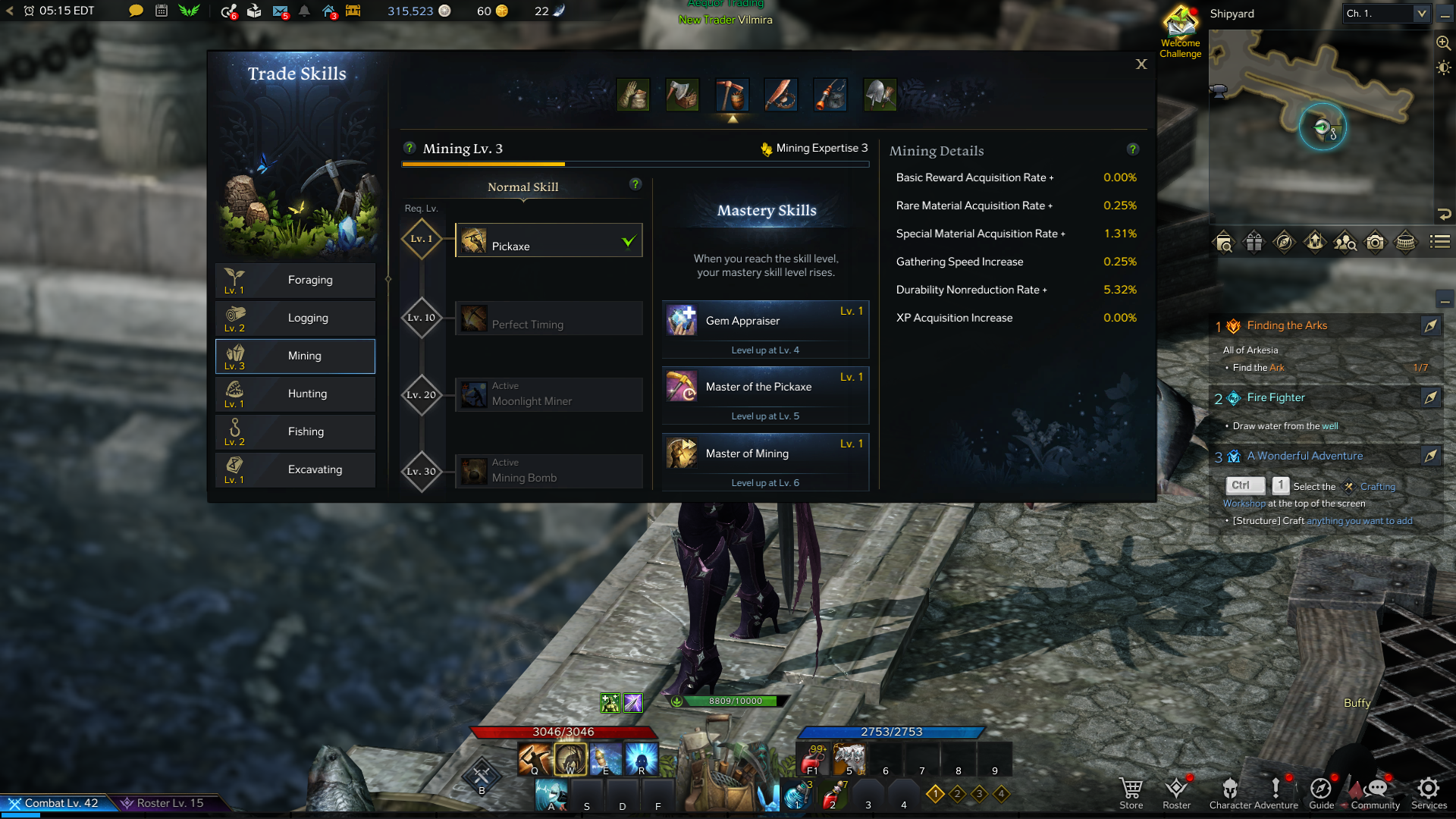
I’ve played Lost Ark’s crafting for years, and I’ll tell you plainly: crafting pays off if you treat it like a small business. I’m a woman who’s focused on life skills, and I’ve learned what matters by doing it, not by theory. Here’s a clear, simple guide you can use right away (updated 10 March 2025).
- 🔨 Crafting basics — what you actually need to know
- ⚒️ Tools and where to get them
- 🏭 How the trade skills pay off
- 📊 Materials and storage — manage like a shop owner
- 🎯 Advanced moves for steady endgame income
- 💰 Which items make the most gold?
- Quick example — simple value calc
- Opinions, warnings, and a few controversial points
- Final notes — a few metaphors and a counterintuitive insight
🔨 Crafting basics — what you actually need to know
Trade skills in Lost Ark let you gather and make things outside of combat. Every character can learn every trade skill, so you don’t lock yourself into a choice. In my experience, start with one or two skills and stick to them; spreading energy thin won’t work the way you expect.
Gathering skills: mining, foraging, logging, hunting, fishing, excavation. Production skills: cooking and crafting. They feed each other. Gather ores to make items, cook ingredients into food buffs, and sell what other players need. Why? Because people always want consumables and enhancement materials — steady demand.
⚒️ Tools and where to get them
Tools affect how fast you gather and the quality of materials. Tool rarities are the usual white/green/blue/purple/orange tiers. Higher rarity usually means higher success rates and better drops. Buy the basics from Tool Merchants in towns. I’ve noticed Mari’s Secret Shop sometimes lists strong options (watch the shop rotation).
By the way, you can craft better tools yourself if you gather the right components. That keeps the loop tight: gather → craft → upgrade tools → gather more.
| Tool | Use | Where | Priority |
|---|---|---|---|
| Mining Pick | Ore and stone | Merchants, Mari’s Shop | High |
| Foraging Gloves | Herbs & plants | Crafting, Guild Shop | Medium |
| Logging Axe | Wood | Merchants, Events | Medium |
| Fishing Rod | Fish | Fishing NPCs, AH | High |
🏭 How the trade skills pay off
Mining often brings steady gold because ores feed enhancement and crafting. Foraging and logging sell well too; people run out of herbs and wood all the time. Cooking makes consumables that raid groups and solo players buy nonstop. Crafting can make higher-value gear, but it takes more time and materials.
There are exceptions: some servers value furniture or event items more. Depends on your niche and on server population. Honestly, don’t assume one path fits every server.
📊 Materials and storage — manage like a shop owner
Materials vary from common to extremely rare. Keep enhancement stones and relics, because they rarely lose value. Perishable cooking ingredients should be processed quickly. I’ve seen players waste space by hoarding common items that tank in price — don’t be that person.
Storage options: personal inventory, shared/guild storage, and premium expansions. Organize tabs by type (enhancement, food, rares). Audit weekly. It sounds dull, but this small habit increases profits noticeably.
“Treat materials like inventory in a store: turnover matters more than sentimental hoarding.” — practical advice
🎯 Advanced moves for steady endgame income
Your Stronghold (if you use it) can process materials passively and reduce crafting time. Focus upgrades that match your goals: Workshop for gear, Farm for cooking inputs. Set crafting queues before logging off so your Stronghold keeps working.
Market timing beats blind crafting. Track auction trends, note when prices rise, and plan batches. I keep a simple spreadsheet to compare material cost vs. product price. Why? Because a recipe that looks profitable can become a loss if material costs spike.
💰 Which items make the most gold?
Consumables (food, potions) sell reliably. Enhancement materials can have larger margins. Rare crafted gear makes big money sometimes, but it’s risky. Here’s a short table of typical margins (your server will vary):
| Category | Typical Margin | Time |
|---|---|---|
| Consumables | 15–30% | Low |
| Enhancement mats | 30–60% | Medium |
| Rare gear | 100%+ | High |
Market timing tips: buy materials when activity dips (Sunday evenings often quieter), sell consumables on raid days (Tue–Thu), and avoid crafting during big events that flood the market. These are rules of thumb; there are exceptions.
Quick example — simple value calc
// 15-minute mining session (example)
Iron Ore: 150 × 2g = 300g
Rare Relic: 3 × 45g = 135g
Epic Stone: 1 × 120g = 120g
Total ≈ 555g → ~2,200g/hour if you keep pace
Opinions, warnings, and a few controversial points
Controversial: I think crafting can be more profitable than chasing raids for some players. Many will disagree — and that’s fine. Another hot take: auction houses sometimes encourage hoarding and price manipulation; that’s bad for new players (and frankly, annoying).
To be fair, crafting isn’t passive money. It takes time, thought, and willingness to adapt. This doesn’t always work out the first month. Watch the market. Watch competitors. Ask yourself: who’s buying this and why?
Here’s a short checklist you can use today:
- Pick 1–2 trade skills and level them.
- Upgrade the matching Stronghold buildings.
- Organize storage and process perishables fast.
- Track material vs. product prices before crafting.
Final notes — a few metaphors and a counterintuitive insight
Think of crafting like tending a garden: the right seed at the right season yields more than frantic planting. Oddly enough, selling steady low-margin consumables often out-earns waiting for one rare sale. I’ve seen it again and again.
One more thing — don’t obsess about perfect efficiency. Repeatable, small gains add up. It’s simple, and it works. Promise. — Maria