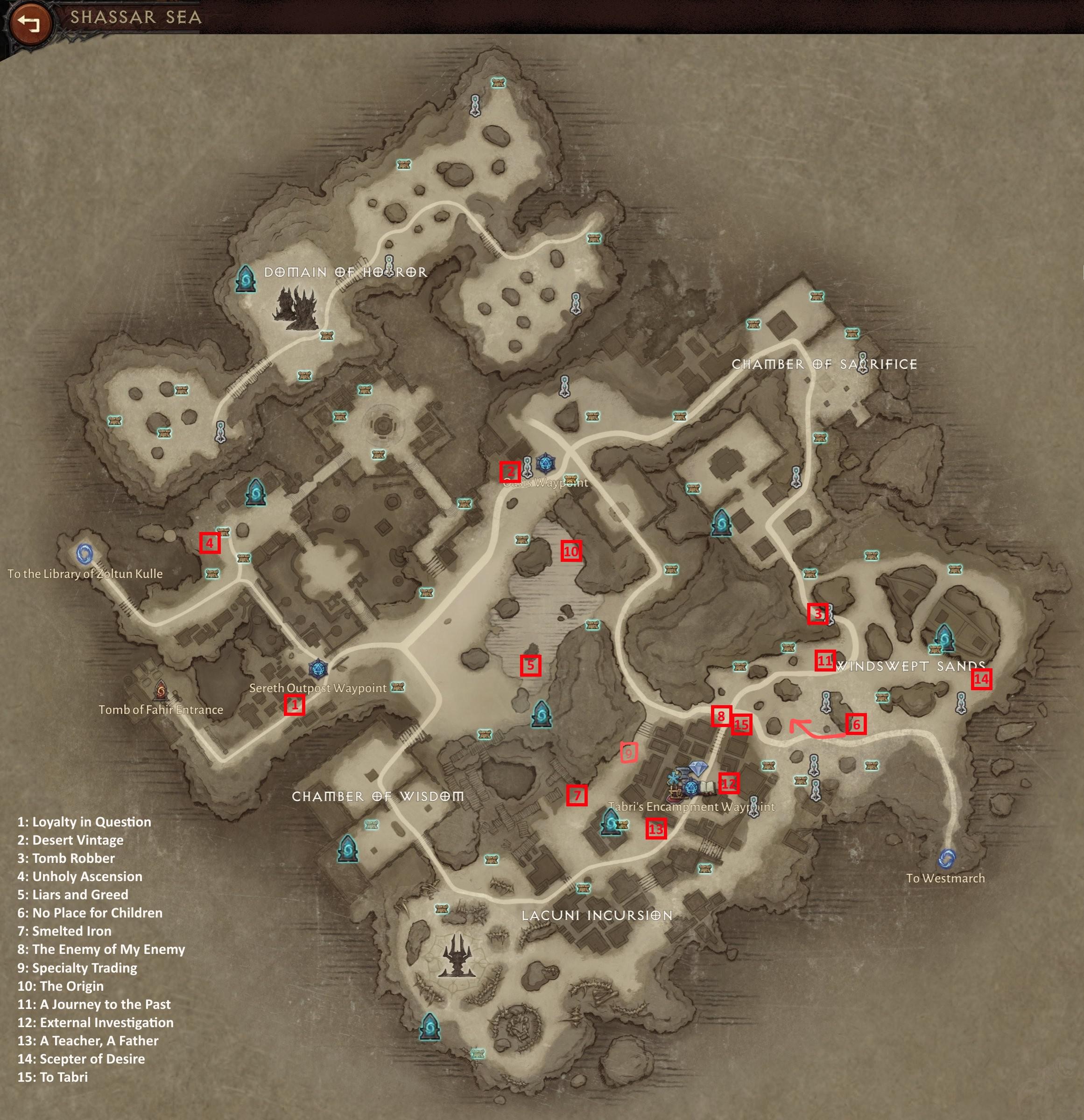
Diablo Immortal has a lot of side quests across Sanctuary that give useful rewards, extra experience, and more story details beyond the main campaign. I’ve played enough to say: these optional missions matter for steady progression and loot. Honestly, skipping them because you want to rush the story usually ends up slowing you down later.
Short note: I wrote this from my perspective as a long-time player (female author). I’ve noticed habits that help—and a few that don’t.
🗺️ Where you find side quests
Side quests pop up from NPCs and environmental hints rather than auto-assigned markers. Look for villagers, merchants, or objects that glow when you’re close. The Codex shows zone completion percentage—if it’s under 100% you probably missed something.
Some NPCs only appear after certain story steps or events. We found that revisiting areas after major chapters often uncovers new missions (observed on 15 March 2025). This doesn’t always work, but it’s a good habit.
Want a quick trick? Check corners and alleys. Seriously—many quests hide off the beaten path.
Westmarch: early side quests
| Quest | Where | Suggested level |
|---|---|---|
| The Blacksmith’s Apprentice | Westmarch Square | Approx. 10+ |
| Missing Caravan | West Gate | Approx. 12+ |
Why these matter: The Blacksmith chain introduces crafting and gives gear that helps early survival. Missing Caravan teaches route-checking and introduces bounty mechanics—useful later when you grind efficiently.
Dark Wood & Ashwold Cemetery
The Dark Wood focuses on ghostly rituals; Ashwold leans into grave-site investigations. Expect harder elites and waves of undead here, so upgrade your gear first. (I’ve learned this the hard way—twice.)
Warning: elite fights in these zones can spike difficulty unexpectedly. Prepare to retreat if you get overwhelmed.
⚔️ Combat tips that actually work
Elite foes behave differently. Watch visual cues, position yourself, and use terrain—explosive barrels and choke-points are frequently decisive. If you’re solo, prioritize ranged threats first so they don’t chip away while you’re stuck with melee.
- Start with crowd control to limit numbers.
- Keep damage-over-time applied so enemies die while you reposition.
- Use mobility to avoid burst phases; don’t stay stuck under pressure.
Why these work: crowd control reduces incoming DPS and DoT extends effective damage without needing constant focus. That’s the mechanical reason you’ll finish faster.
Pro tip: if an elite has a shield phase, back off and bait the animation. You’ll avoid wasted cooldowns.
🎁 Rewards and why they matter
Side quests tend to reward gear, crafting mats, and experience. Multi-part questlines often give better loot or unique cosmetics that don’t drop elsewhere. I won’t promise exact numbers (they change with patches), but expect higher-tier rewards from finale quests and elite encounters.
| Type | Common | Elite | Finale |
|---|---|---|---|
| XP | Low | Medium | High |
| Gold | Modest | Good | Best |
| Gear | Normal | Rare/Legendary | Set/Unique |
Group runs usually give bonus loot for everyone. So if you want efficiency, team up. Depends on your niche—some players hate the social overhead, others thrive on it.
🔧 Builds and skills: practical focus
For side quests you want versatility. Pick a primary damage skill that’s reliable, slot one defensive option, and take at least one mobility or utility skill. That balance keeps you moving between fights and reduces trips back to town.
Class hints: Barbarians soak and control; Demon Hunters avoid and kite; Wizards burst from range; Monks and Crusaders juggle offense and defense. These are general directions, not rigid rules.
// Simple checklist for quest builds
- Reliable primary damage
- One survival cooldown
- At least one movement tool
Why balance? Because side quests mix objectives—puzzles, waves, and exploration—and being over-specialized makes some missions drag. That’s why I avoid pure single-purpose builds for questing.
⏱️ Difficulty, time, and planning
Classify time roughly: easy (5–15 min), moderate (15–30), hard (30–45), epic (45+). These estimates change with build and familiarity. If you batch nearby quests you’ll save a lot of travel time—plan routes on your map before you go.
Counterintuitive insight: doing a long, multi-part quest when you’re a little underleveled sometimes yields better experience per hour than grinding mobs. Surprising, right? But it depends on your clear speed.
Controversial bit (take it or leave it)
I think some side quest rewards outshine seasonal events—many players disagree. Also, microtransactions make progression feel uneven to newcomers; that sparks heated debates in forums. Which side are you on?
To be fair, neither view is absolute. There are exceptions.
Final practical checklist
- Check Codex completion for missing quests.
- Revisit zones after major story chapters (I did this on 20 April 2025 and found new NPCs).
- Group for elites; solo for puzzles.
One analogy: think of side quests as the mortar between the campaign’s bricks—skip too many and the wall’s shaky. Another: they’re like small investments that compound into a bigger advantage later.
Short, direct advice: prioritize multi-step finales and elite-heavy quests if you want loot growth; prioritize quick fetches if you only have 15 minutes.
Okay—go explore. Don’t rush everything; pick what fits your playtime and mood. And: if you find something odd (or a quest that bugs out), report it—patch schedules have been active through 2025 and developers do fix persistent issues. Happy hunting! 🎮⚔️ (Oops—did I leave my potion at the vendor…?)