I play Warriors in Rift and I’ll tell you what works, plain and simple. I’ve played since 2012 and I still learn new tricks; you’ll get practical choices here, not fluff. Honestly, if you want to hit things hard or hold a line for your team, the Warrior is flexible and forgiving.
Want a quick question before you read? Which do you prefer: smashing faces or keeping allies alive? Your answer should guide the first souls you pick.
- How Warrior souls work (short version)
- Starter builds that actually work
- Stat priorities (specific and practical)
- Basic single-target rotation — applied, not theoretical
- Gearing tip (counterintuitive)
- Leveling and zone flow
- Why these choices? (the reasoning)
- Quick dos and don’ts
- Final bit — mindset and practice
How Warrior souls work (short version)
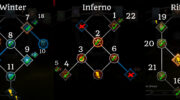
The soul system lets you mix up to three sub-classes to build a role. You spend points in those souls to get active abilities and passives. Think of souls as tools on a belt—you combine them for a job. In my experience, picking complementary souls is more important than chasing the highest single stat. (There are exceptions based on niche content.)
As of March 12, 2025 there are nine Warrior souls most commonly used: Champion, Paragon, Paladin, Reaver, Void Knight, Warlord, Beastmaster, Riftblade, Tempest. Each has a clear focus: some hit hard, some soak hits, some buff allies. Here’s a simple table so you can see the split.
| Role | Souls (examples) |
|---|---|
| DPS | Champion, Paragon, Riftblade, Beastmaster |
| Tank | Paladin, Void Knight, Reaver, Warlord |
| Support/Hybrid | Warlord, Tempest (utility and buffs) |
Starter builds that actually work
My advice: start simple and master one rotation. Why? Because muscle memory beats spreadsheets when you’re under pressure. Here’s what I recommend for early levels.
- Solo DPS: Beastmaster primary, Champion secondary, Riftblade utility (pet helps soloing).
- Dungeon DPS: Champion primary, Paragon secondary, Beastmaster tertiary (clear and burst).
- Dungeon Tank: Paladin primary, Warlord secondary, Void Knight tertiary (survivability + group buffs).
Yes, some players swear Paladin is overrated in raids — controversial, I know — but for most group content you’ll be fine with it. Also, Warlord gets ignored too often; we found it shines in group utility even if it’s not flashy.
Stat priorities (specific and practical)
Stop chasing vague “more damage” tips. Here’s what matters, in order, for typical DPS Warriors:
- Strength — main damage stat
- Critical Hit — increases your burst
- Attack Power — flat damage gain
- Physical Crit Power — makes crits stronger
- Hit — cap this at 320 for max-level PvE (as tuned in the March 12, 2025 patch)
Tanks prioritize survivability: Endurance first, then Guard and Dodge, with enough Strength to keep threat. This doesn’t always work the same in every dungeon; it depends on your niche fights and group comp.
Basic single-target rotation — applied, not theoretical
Warrior rotations use builders to make combo points and finishers to spend them. That’s the core. Why? Because finishers scale with combo points and that’s where your damage comes from.
“Use builders to make points, save finishers for full stacks — that’s how you avoid wasted damage.”
// Simple rotation pseudocode
if (gapCloserReady) use BullRush;
applyDebuffs();
while(comboPoints < max) use Builder;
use Finisher;
use Cooldowns during boss phases;
Single-target example (short): Bull Rush → Mighty Blow x3 → Bladefury → repeat.
AoE: start with Thunderous Strike, then Whirlwind, then Bladefury at 3+ combo points. Short and to the point.
Gearing tip (counterintuitive)
Sometimes a lower-item-level weapon with the right hit/crit spread will outperform a higher-level weapon with wasteful stats. I learned this the hard way — and yes, it’s annoying when numbers lie to you on a tooltip. So check the full stat package before you vendor your old stuff.
Leveling and zone flow
Level smart, not fast. Follow zone level ranges and do story chains for steady gear upgrades. Queue for dungeons while questing to speed progress. Here’s a compact zone map I use for new players:
| Level | Zones |
|---|---|
| 1–10 | Mathosia / Freemarch — learn basics |
| 10–20 | Silverwood / Stonefield — first dungeons |
| 20–30 | Gloamwood / Scarlet Gorge — mounts appear |
| 30–50 | Scarwood Reach → Moonshade → Iron Pine — prepare for endgame |
Keep weapons updated. Seriously — your weapon is the single biggest DPS or leveling stat. Save potions for elites and use your pet to tank when you solo (if you have Beastmaster). It’s basic, but it works.
Why these choices? (the reasoning)
I pick builds and stats to solve two problems: survive and not waste time. When you balance threat and damage you smooth group play and speed runs. That’s efficient — and that’s what most groups want. If you don’t handle threat, your healer will hate you; if you can’t output, runs slow down. So choose souls and gear that cover both, or pair with teammates who complement you.
Here’s the funny part: some veteran players value utility over raw numbers in specific fights. Watch this — you’ll often see a slightly lower DPS Warrior kept in a raid because they save the group with timely interrupts or buffs. Context matters.
Quick dos and don’ts
- Do learn one solid rotation and the available cooldowns.
- Don’t dump stats blindly on a single number without checking hit caps.
- Do save builds for boss fights and swapping roles between solo and group play.
- Don’t assume your build scales linearly — there are breakpoints.
To be fair, some rules here will change with specific encounters (there are exceptions), and balance patches in 2024–2025 adjusted a few soul numbers. Keep an eye on the patch notes and community forums.
Final bit — mindset and practice
Practice rotations on target dummies, then in low-stakes dungeons. Muscle memory is the goal. I’ve noticed players who practice 15 minutes a day improve faster than those who grind without focus. Between us: take notes while you play (I do).
One last, slightly odd tip: if you feel stuck, try a weird soul mix for a week — you might discover a combo other players overlook. It happened to me once and I kept laughing at how effective it was. I—well, I mean, give it a shot.
See you on the battlefield. Bring a sword, bring patience, and bring snacks! ⚔️🛡️