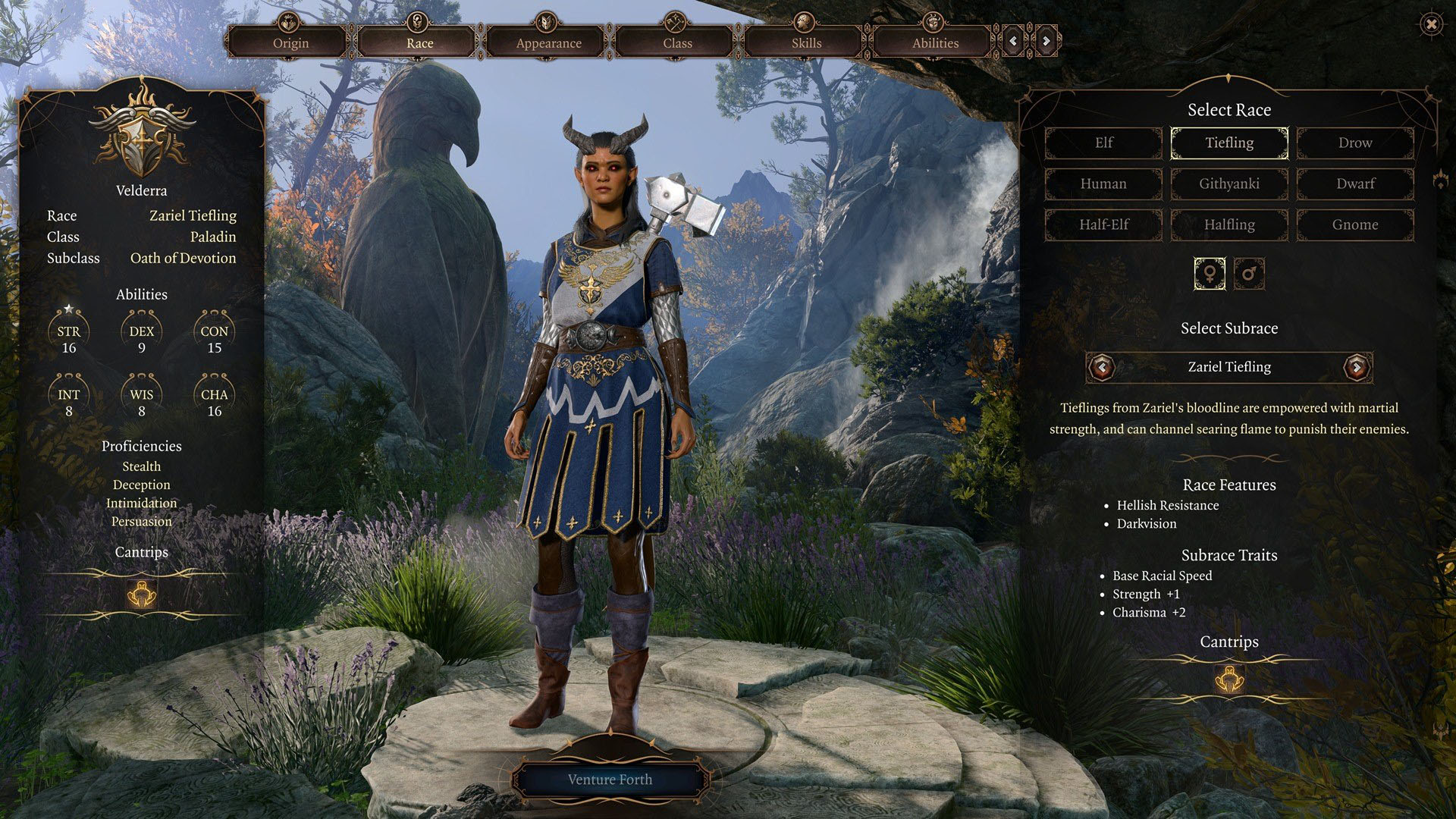
If you want a Paladin that actually carries a party through hard fights, read this — I’ll tell you what works and why. I’ve played Baldur’s Gate 3 since release (August 3, 2023) and refined several builds; these are the lessons that stuck for me. Honestly, you’ll save hours by skipping common mistakes.
Pick an Oath that fits your team
Oaths change how you play. In my experience, Devotion is the support knight; Ancients eats spells and controls crowds; Vengeance wants to hunt a single target until it dies. Which do you need right now?
There are trade-offs (depends on your niche). Devotion helps allies, Vengeance gives raw damage, Ancients resists magic. I’ve noticed people pick Vengeance for thrills — it’s fun, but it won’t work the way you expect if your party lacks healing.
Stats: what to raise, and why
Short answer: Strength and Charisma, then Constitution. Here’s a compact table I use at the start of a campaign (aims at level 12):
| Ability | Target | Why |
|---|---|---|
| Strength | 16–20 | Attack and damage |
| Charisma | 14–18 | Spell DC and auras |
| Constitution | 14+ | HP and concentration |
| Wisdom | 12 | Perception, saves |
| Dexterity | 10–12 | Initiative if light armor |
| Intelligence | 8–10 | Often least useful |
Why this order? Strength wins fights; Charisma scales your class features; Constitution keeps you alive and holding concentration. There are exceptions — if you plan Pact/Hexblade multiclass, Charisma becomes your main stat earlier.
Small aside: if your party is full of tanks, you can lean Charisma and be the face. Between us, I like builds that talk and hit.
Races and backgrounds — practical picks
Half-Orcs are tempting for critical damage, but I’ll be frank: they’re overrated if you rely on spells more than crits. Zariel Tieflings do give Charisma and fire resist — useful in many fights — but check whether that subrace is enabled on your server (mods and settings vary). Dwarves win for raw durability.
Backgrounds matter for roleplay and a few skill checks. Soldier and Noble are reliable; Acolyte gives roleplay hooks. Pick what you’ll actually use.
Spells and Divine Smite — how I decide
First rule: treat spell slots as both spells and fuel. I prefer to keep one high slot for a decisive Smite and use lower slots for utility or finishing blows. Bless scales well; Shield of Faith is useful early but forget it when you get better buffs.
- Cast Aid when you need flat HP boost (non-concentration).
- Save Lesser Restoration — it swings some fights.
- You can choose to Smite after you see a hit, so don’t burn your best slot too early.
Why this approach? Smite multiplies damage with a crit and higher-slot spends are finite. I often ask: do I need a reliable CC or raw nova this turn? The answer guides the cast.
About multiclassing (controversial: Padlock is cheesy)
Padlock (Paladin/Warlock) gives short-rest slots for smites; it’s powerful and yes, it feels cheesy in groups — people argue it breaks balance. I found it effective when I wanted consistent burst without long rests. Sorcadin (Paladin/Sorcerer) converts spellcasting into more smite fuel via Metamagic and stays elegant for nova turns.
Mixing classes changes resource flow. If you want a reliable smiter every fight, multiclassing can be the answer (there are exceptions).
Watch this: starting Paladin to 6 for Extra Attack and Aura of Protection, then taking two or more caster levels, gives you a usable hybrid without losing core features. But don’t expect perfection — multiclassing slows your high-level class features.
Equipment: what to hunt for
Don’t chase legendary names blindly. Some items you see on forums are mod-only or tabletop carryovers (that’s a fact). Focus on stats: items that add Strength, Charisma, attack bonus, or Con are valuable. Cloak or ring that boosts saves is simple and effective.
| Slot | Priority | Why |
|---|---|---|
| Armor | High | Heavy armor gives consistent AC |
| Weapon | High | Two-handed for big hits or sword+shield for defense |
| Amulet/Ring | Medium | Save boosts or regeneration help long fights |
Pro tip: use consumables (Elixir of Strength, Potion of Speed) before major fights. They’re cheap insurance. Code snippet for a simple macro I use in party games (works in launchers that accept macros):
/attack
/cast Divine Smite (if hit)
Playstyle notes — rhythm matters
Short: be decisive. Use your aura; position for flanks.
Long: I position my Paladin to force opponents into my reach, then zone enemies with spells or Smite a priority target. If the enemy has nasty magic, Ancients or defensive spells save rounds. I’ve noticed teams do better when one player commits to aggression and another handles control — you don’t want both to hesitate. There are exceptions, of course, and you’ll adapt per fight.
Here’s the funny part: sometimes playing a Paladin is like being a lighthouse — you draw fire and steady the ship. Other times you’re a hammer. Both work.
“If you think a one-size-fits-all build exists, you’re wrong.” — practical advice from my builds
Surprising insight: a Paladin built around Charisma and utility can outlast a brute-force fighter in narrative encounters because dialogue hooks and saves matter as much as damage. Who knew? (I did, eventually.)
Go try one of these routes. If something fails, tweak it — a little redundancy in gear or spells can save an entire run. To be fair, some strategies look better on paper than in practice, and that’s okay.
— Written by a player who’s re-specced more Paladins than she cares to count. ⚔️✨