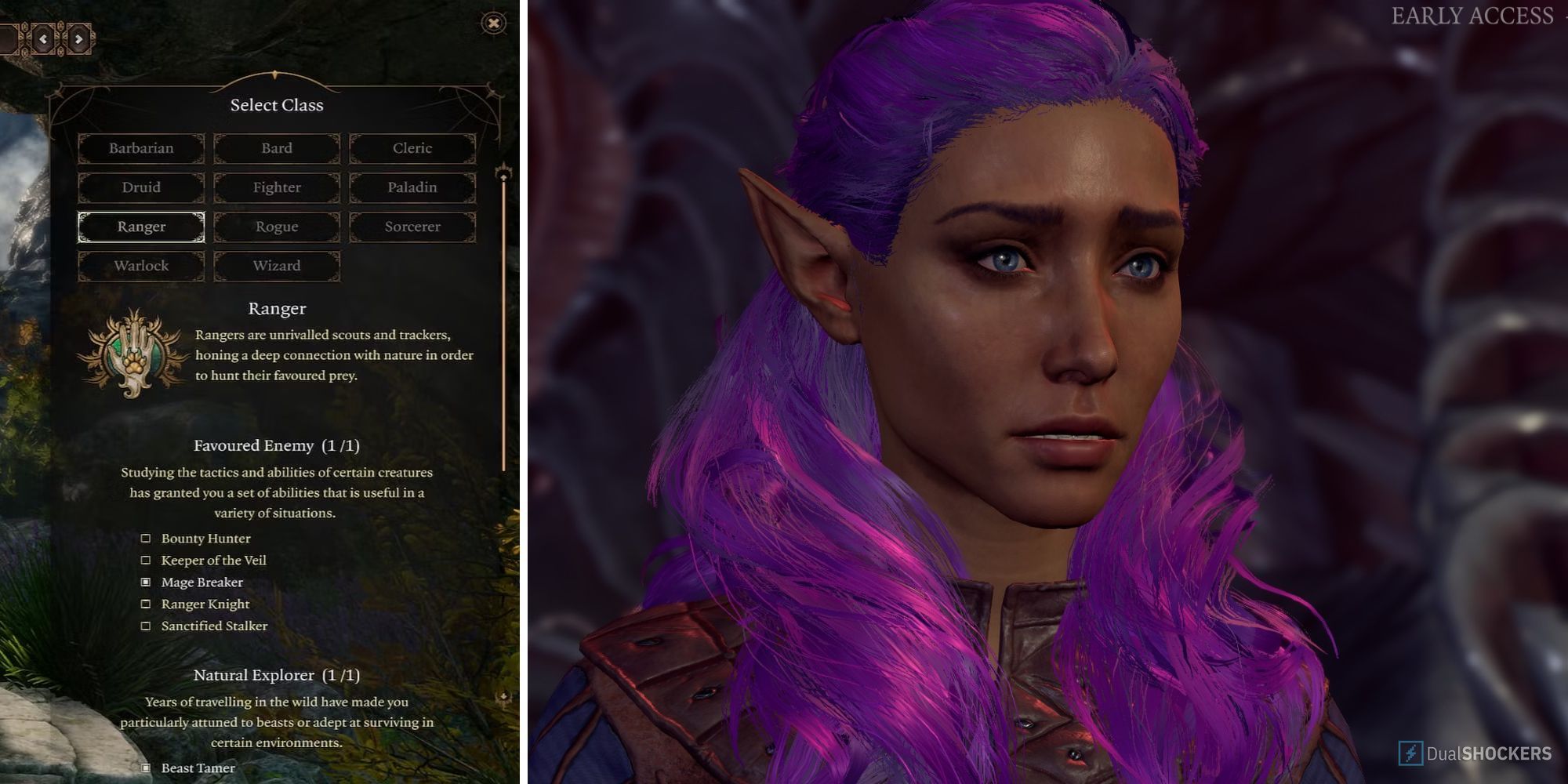
I play Baldur’s Gate 3 a lot, and I pick Rangers more than I should admit. Rangers mix weapons and nature magic in ways that can feel effortless or fiddly depending on the subclass you pick. Which one you choose changes how you approach fights, exploration, and party roles — and I’ll tell you why based on what I’ve seen at the table and in the game.
Here’s the simple truth: there are three Ranger subclasses in BG3 as of 17 March 2025 — Beast Master, Gloom Stalker, and Hunter — and each leans into a different fantasy. Which do you want: a loyal companion, brutal first strikes, or a steady, adaptable combatant? Read on. Want me to recommend one? I will. But first, the facts and the reasons.
Beast Master — your pet changes the fight 🐺
Beast Master gives you a companion that acts with you. In my experience that creates the most character moments. Honestly, some players think the pet is gimmicky; I disagree, but there are trade-offs.
Why pick this? Your animal soaks hits, can flank for advantage, and scouts. It scales with you (HP, damage) so it stays useful past the early game. That said, the build needs micromanagement — you’re effectively controlling two combatants. This doesn’t always work in hectic fights or when your party is crowded; there are exceptions.
Practical tips: prioritize Wisdom after Dexterity to help spells and saves. Take gear that boosts your attack advantage or AC. Consider a Druid dip late if you want extra spell slots and options (depends on your niche). By the way, the emotional payoff is real — people remember a wolf that saved the party!
Gloom Stalker — alpha strike and shadow play
Gloom Stalker is about hitting hard on turn one. Dread Ambusher and Umbral Sight let you open fights with extra attacks and better darkvision mechanics. If you like killing the priority target before they act, this is your subclass. Sounds a bit broken? Some players say it is — controversial, I know — because it rewards stealth and first-turn positioning more than steady trading blows.
Why it works: you gain positioning and initiative superiority. That matters in caves and dungeons, where dim light is common. I’ve noticed builds that push initiative (feats, items) make Gloom Stalker terrifying. Caveat: it depends on encounter design; not every boss can be ambushed, and sometimes you’ll waste resources if fights don’t start your way.
Hunter — dependable, flexible, and forgiving 🏹
Hunter gives choices that define your role: consistent single-target damage or area control. The options are selected across progression points, so you shape the character. I prefer this when I want a less fiddly, more plug-and-play Ranger.
Why pick it? Abilities are almost always useful — you won’t be waiting on a pet or a special lighting condition. That reliability is why it’s popular with new players and those who just want to play without constant toggles. To be fair, the Hunter can feel less flashy than the other subclasses, but it gets the job done.
Quick comparison (clean and useful)
| Feature | Beast Master | Gloom Stalker | Hunter |
|---|---|---|---|
| Core idea | Companion that fights with you | High first‑turn damage | Choice-driven, steady DPS |
| Best when | You like micromanagement | You get surprise and initiative | You want reliable output |
| Downside | Extra commands to manage | Less consistent in open fights | Less flashy, niche choices matter |
Here’s the funny part: people argue endlessly about which is “best.” I think Gloom Stalker has the edge for raw performance in most campaign encounters, but that’s a delicate claim — and not everyone agrees (controversial point number two: Gloom Stalker can trivialize some stealth-first fights if you stack initiative and surprise mechanics!).
“Pick the subclass that matches how you want to play, not the one with the biggest numbers.” — practical advice from hours of play
Short, practical builds and why they work
- Beast Master: Dex primary, Wisdom second. Give your pet room to flank. Spells that support like healing or crowd control amplify the duo (they scale your options, not just damage).
- Gloom Stalker: Max initiative and opening damage. Items or feats that boost first turn help you actually use Dread Ambusher. Why? Because the subclass converts first-turn advantage into kills — that’s the math behind its strength.
- Hunter: Build to the choice you make (single-target gear for Colossus-like options, AoE gear for Horde-like options). The subclass rewards straightforward optimization rather than clever tricks.
Want a tiny rotation example? (I write macros sometimes.)
// opening turn (Gloom Stalker example)
Use Stealth
Apply Hunter's Mark
Move into shadow
Attack x2 + Dread Ambusher extra
Essential gear priorities: reliable attack bonuses, movement tools (boots or spells), and items that shore up saves. Why those? Movement and initiative let you choose fights; consistent attack bonuses scale your damage more predictably than situational trinkets.
Final counsel (short)
I’ve noticed players who pick Beast Master for roleplay keep it forever. Players who want the highest numbers tend to like Gloom Stalker. If you want the least headache, pick Hunter. Which will you try next? Try one and swap if it feels off — BG3 lets you experiment.
Oddly enough, the “best” subclass is often the one you enjoy. Between us: fun matters. Don’t overthink it, but do think about why you want a pet, stealth, or choices. That explanation will guide your gear and your leveling — and that’s what actually changes your game experience.
Surprising insight: sometimes the quirkiest choice (a poorly min‑maxed Beast Master) creates the most memorable run. It’s true! So go try a wolf, snipe from the shadows, or just be the dependable hunter. Have fun out there. 🏹✨